



There is no single best month to sail the Mediterranean — there is a best month for each sea, and they do not coincide. The Cyclades are at their calmest before the meltemi settles in; the Balearics are at their calmest a fortnight later; South Sardinia is unusable in mid-May and excellent by late June. Below is the honest version, ground by ground, built on twenty-six summers of wind and sea data rather than on brochure adjectives.
The short answer, ground by ground
| Sailing ground | Best window | What the data actually says |
|---|---|---|
| Cyclades | 15 May – 25 June | Across 26 summers, not one meltemi episode lasting three days or more was recorded between 15 May and 11 June. |
| Balearics | 5 June – 2 July | The last of those weeks carries strong wind on 1.1% of days, against 12.6% in the week of 15 May. |
| South Sardinia | 19 June – 2 July | Shielded from the mistral by the bulk of the island: a hard day starts at 20 knots here, against 25.1 in the Strait of Bonifacio. |
| Saronic Gulf | Mid-May – mid-June, or late June | The most sheltered ground we sail: a hard day starts at just 15.4 knots, against 24.3 in the neighbouring Cyclades. |
Each of those links opens the full week-by-week table for that ground: wind risk, the share of hard days, how many of the twenty-six summers were affected, sea temperature and daylight.
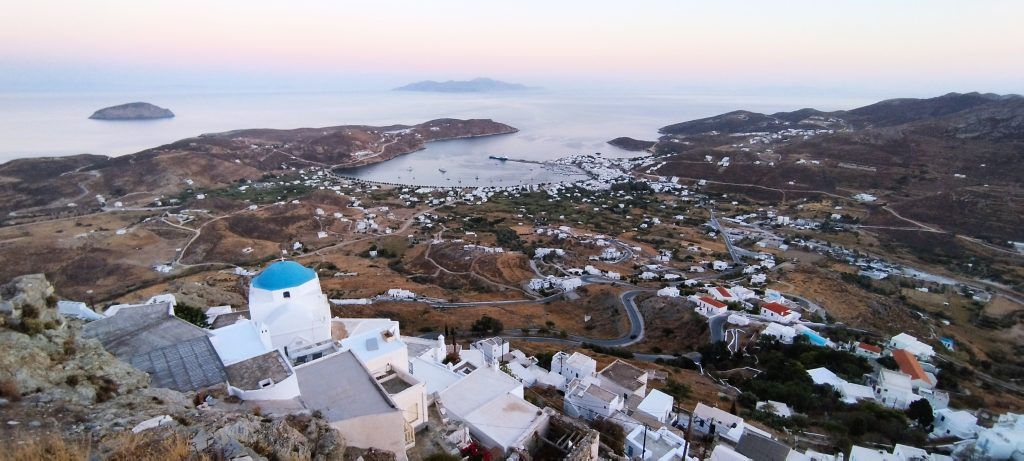
Which month, which islands
The same answer read the other way round: pick the month you can travel, and here is where it takes you.
| Month | Where | Why there, then |
|---|---|---|
| April – May | South Sardinia — Cagliari, Villasimius, Carloforte | Turquoise lagoons and flamingos before anyone else arrives, and a sea still at 19 °C. |
| Easter | Ruta de la Sal — Barcelona to Ibiza | A legendary offshore passage, sailed as crew rather than as a passenger. |
| May – June | Cyclades — Kleftiko, Polyaigos, Kimolos | The best window anywhere in this list: moderate wind, empty islands, water still cool. |
| June | Aeolian Islands — Stromboli, Panarea, Filicudi | A light anticyclone means little wind and a good deal of motoring — we say so plainly. |
| Mid-May – July | Tromsø to Nordkapp | The week only works because the sun does not set at 71° north. |
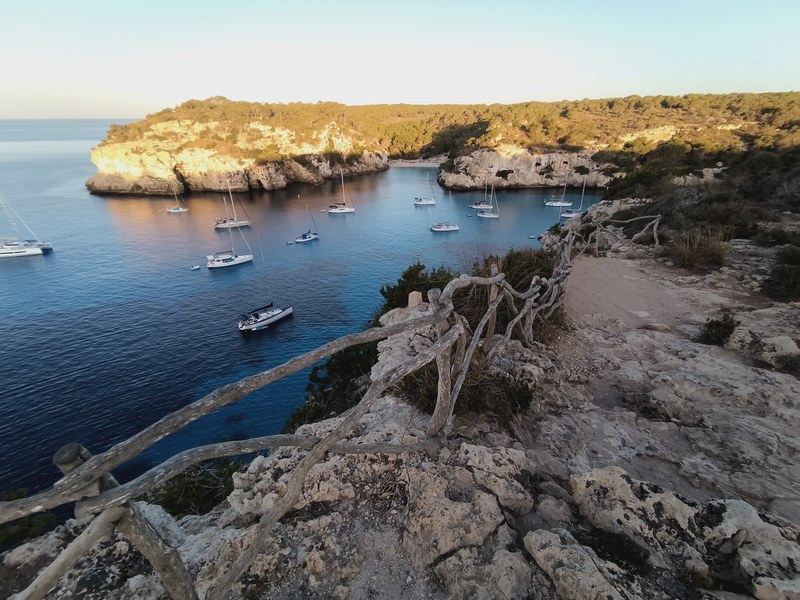
| July – August | Menorca — Turqueta, Macarella, Pregonda | Night crossings put you at anchor before the day boats and before the wind. |
| July – August | Saronic Gulf — Hydra, Dokos, Spetses | A closed gulf with somewhere to tuck into, while the meltemi makes the Cyclades hard work. |
| September | Cyclades again — Polyaigos, Sifnos, Serifos | Warmest water of the year, the meltemi fading, the islands emptying. |
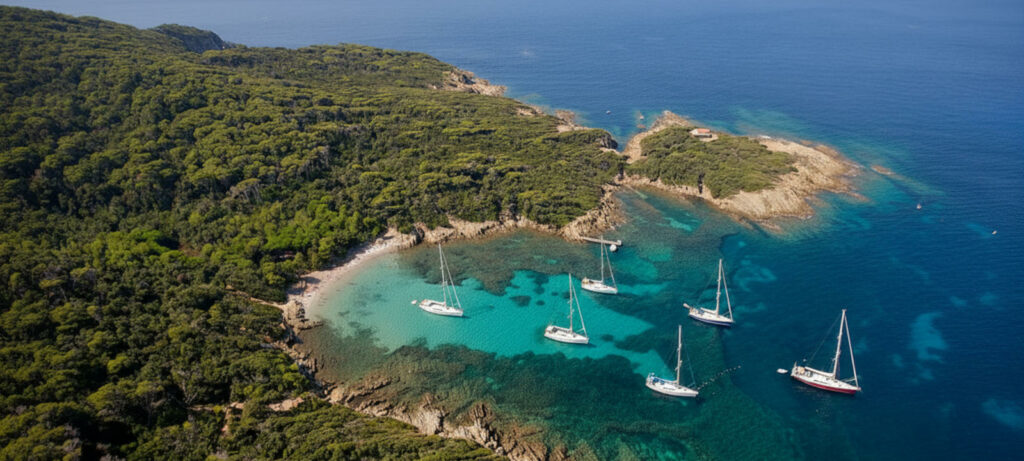
| October | Côte d’Azur — Porquerolles, Port-Cros, Le Levant | The season stretches along the Var coast once Greece has closed. |
What “a hard day” means, and why the threshold moves
A hard day is not the same wind everywhere. In the Saronic Gulf it begins at 15.4 knots; in the Cyclades, where the fetch is longer and the sea builds, at 24.3; in South Sardinia at 20, against 25.1 two hundred miles north in the Strait of Bonifacio. The threshold is set by what the sea does under that wind in that place, not by a number on a scale — which is why “force 5” tells you almost nothing until you say where you are.
The figures behind every table on this site come from twenty-six summers of reanalysis, week by week, for each ground: the share of days above the local threshold, and how many of those summers were affected at all. A week that reads 2.7% with four summers affected is a different proposition from one that reads 2.7% because a single bad year dragged the average up.
When the sea is actually warm enough
Mid-May is cold everywhere, whatever the air temperature says: 18.7 °C in South Sardinia, 18.9 in the Cyclades, 19.4 in the Saronic, 19.6 in the Balearics. Swimming is brief and bracing. By late June every ground is past 22 °C, and the peak comes in the second half of August — 27.9 °C in the Saronic, 27.8 in the Balearics, 27.4 in South Sardinia. The Cyclades stay the coldest of the four all summer, topping out near 25.7 °C, and the reason is the meltemi itself: it drives the surface water away and colder water rises to replace it.
Three things the averages will not tell you
The meltemi has a second wall, and it lands in September. Everyone knows about late July and August. Fewer people know that the single worst week in the Cyclades table is 4–10 September, at 11.5% of days above threshold and twelve summers out of twenty-six affected. September buys warm water and empty islands, and pays for it in wind.
The rissaga is not on any forecast. In the Balearics, and above all in the Ciutadella canal, the water level can empty and refill within minutes. The record in our twenty-six summers is a five-metre oscillation, in the week of 12–18 June — a week that otherwise reads as one of the calmest of the year. It is predicted separately from the wind, and it is watched before entering the canal.
In the Saronic the problem is the opposite one. It is the most sheltered ground we sail, which means the honest question there is not how to avoid the wind but whether there will be enough of it to sail at all. In the week of 5–11 June, one summer in twenty-six saw a hard day. The gulf only really wakes up in August.
Beyond the Mediterranean
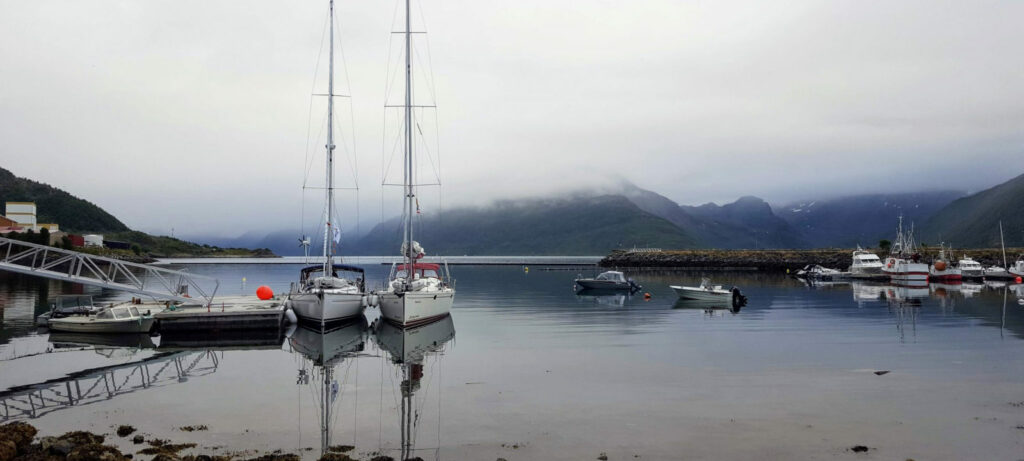
Two of our weeks sit outside this calendar entirely. Tromsø to Nordkapp runs from mid-May to late July, and it only fits into seven days because the sun does not set at 71° north — you round the cape by sea at an hour that would be the middle of the night anywhere else. And in November, December and January, when the Mediterranean has shut, the trade winds are steady in Cape Verde.
Common questions
When is the best time to sail the Mediterranean?
Between mid-May and early July, depending on the sea. The Cyclades peak first, from 15 May to 25 June; the Balearics from 5 June to 2 July; South Sardinia from 19 June. If you can only travel in high summer, the Saronic Gulf and the Balearics handle August better than the Cyclades do.
Is September a good month?
For water temperature and for crowds, it is the best month of the year. For wind it is not: the Cyclades record their worst week of all in early September, and the Balearics climb back to around 10% of hard days by mid-month. It is a fine month to sail, provided the week is built with that in mind.
When is the water warm enough to swim?
From about 15 June everywhere, and comfortably so from July. Before that, expect 19 to 21 °C — swimmable, briefly. The warmest fortnight of the year is the second half of August, close to 28 °C in the Balearics and the Saronic.
Which ground is easiest for a first week?
The Saronic Gulf. Short hops, shelter within reach at all times, and the lowest wind threshold of any ground we sail. The Cyclades are the most spectacular and the most demanding; they reward a crew that has done a week somewhere else first.
Pick your month, and we will build the week
Every week is private: one yacht, your group alone aboard, a professional skipper included, and no shared cabins. Tell us about your group and the dates you can travel, and we will tell you honestly which sea suits them — including when the answer is a different month from the one you had in mind.
5.0/5 on Google (9 reviews) and 4.5 on Trustpilot (13 reviews). 22 reviews from crews who actually sailed with us, on two platforms we cannot edit. Read every one of them.