



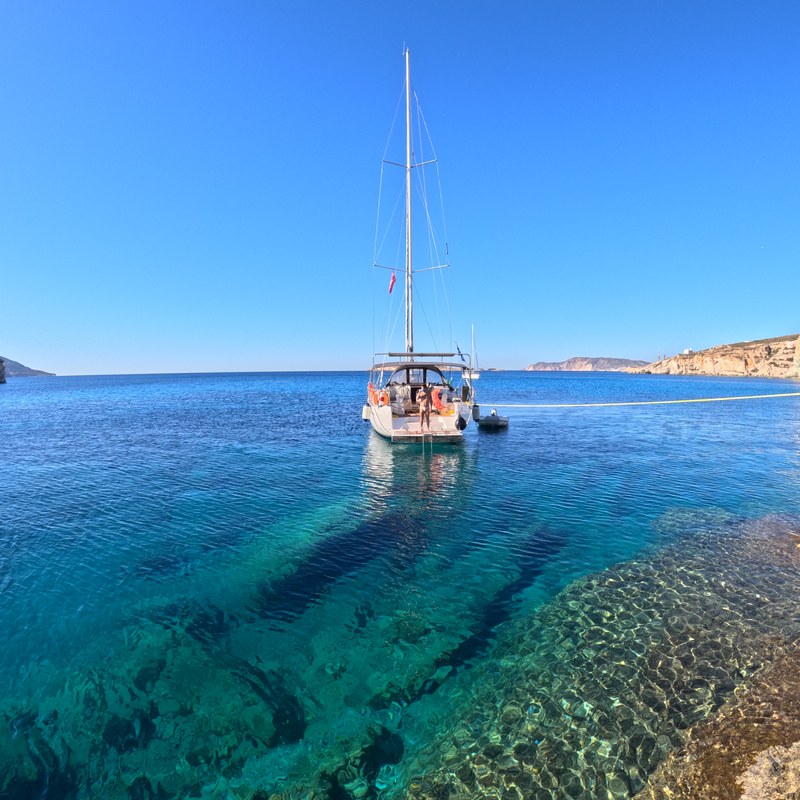
Polyaigos is the largest uninhabited island in the Aegean, and its neighbour Kimolos draws few visitors. Between them runs a wild channel, crossed early on a flat sea with a coffee in hand, watching for dolphins, seals and the birds that hunt at first light, before going in to swim in the clearest water in the Cyclades. You stay the whole day at anchor, and in the evening you have dinner at Psathi, below the white village of Kimolos.
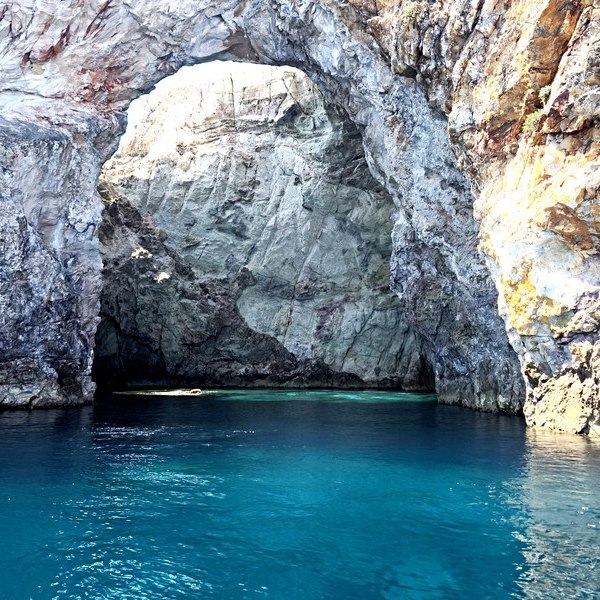
Why they are empty when Milos is full
It is not a question of beauty. In the Cyclades almost everything is beautiful. It is a question of transport.
Milos has an airport and direct ferries from Piraeus. Kleftiko, its postcard cave, takes the day boats that leave Adamas mid-morning and return late afternoon. Kimolos has only a small ferry from Pollonia, on the north-eastern tip of Milos: a twenty-minute crossing that most visitors never make. And Polyaigos has nothing at all — no landing stage, therefore no visitors.
How busy a place is follows how many ways there are to reach it. It is as blunt as that, and it is the only rule that matters when you are looking for empty anchorages. You are not looking for the prettiest places: you are looking for the ones you cannot reach except under sail.
Polyaigos: eighteen square kilometres and nobody
The name means “many goats”, and it is still accurate: they are the only residents. The island is a Natura 2000 site, with reported Mediterranean monk seal and Eleonora’s falcon, so you anchor there the way you behave in someone else’s house.
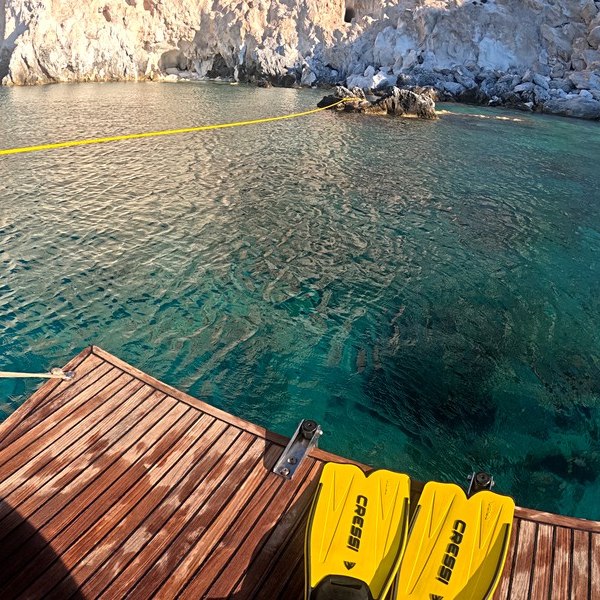
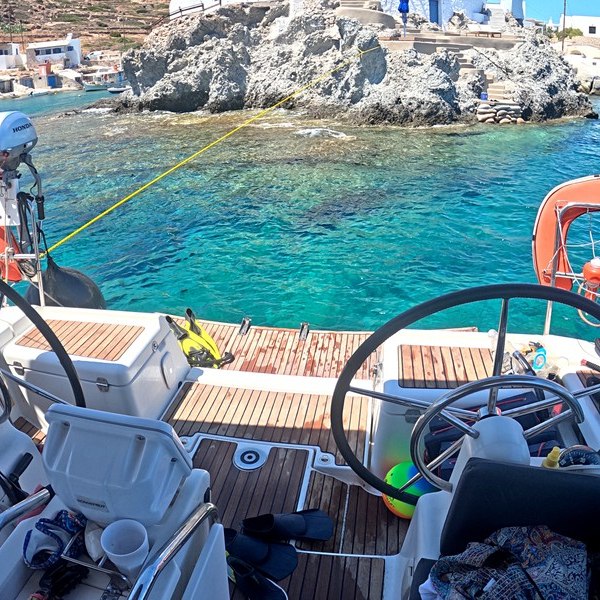
We anchor in the strait that separates it from Kimolos, over pale sand. The colour the water takes there is hard to describe without sounding like a brochure: let us say you watch the chain settle in twelve metres, and that everyone aboard goes quiet first and swims second. It is the one anchorage of the week where nothing is planned — you arrive, you stay, you leave when the light goes.
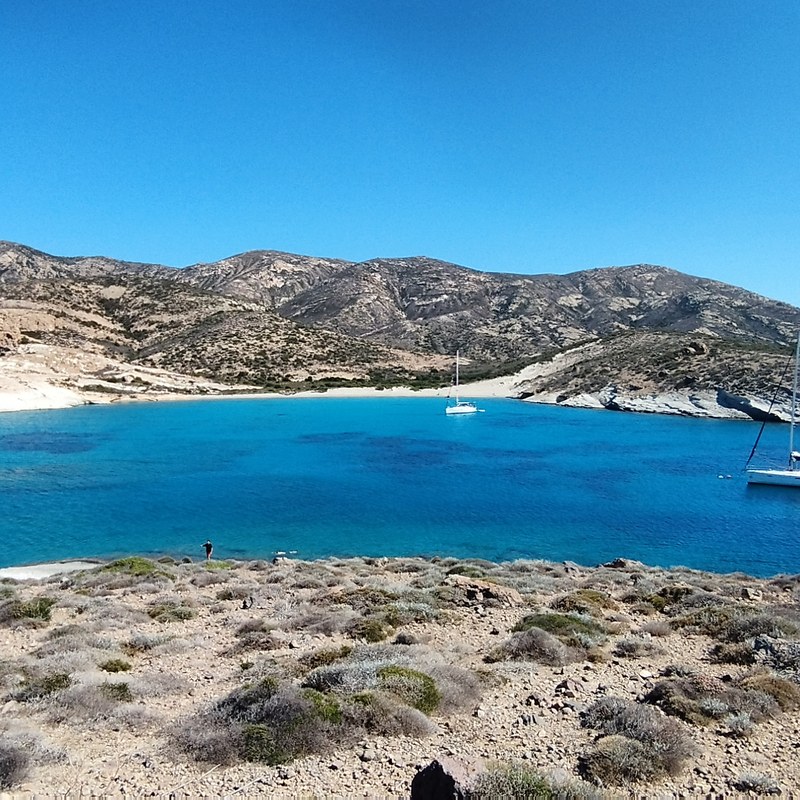
There is nothing ashore. No taverna, no water, no shade. That is exactly why there is nobody, and it is the island’s best argument.
Kimolos, the island you keep for the evening
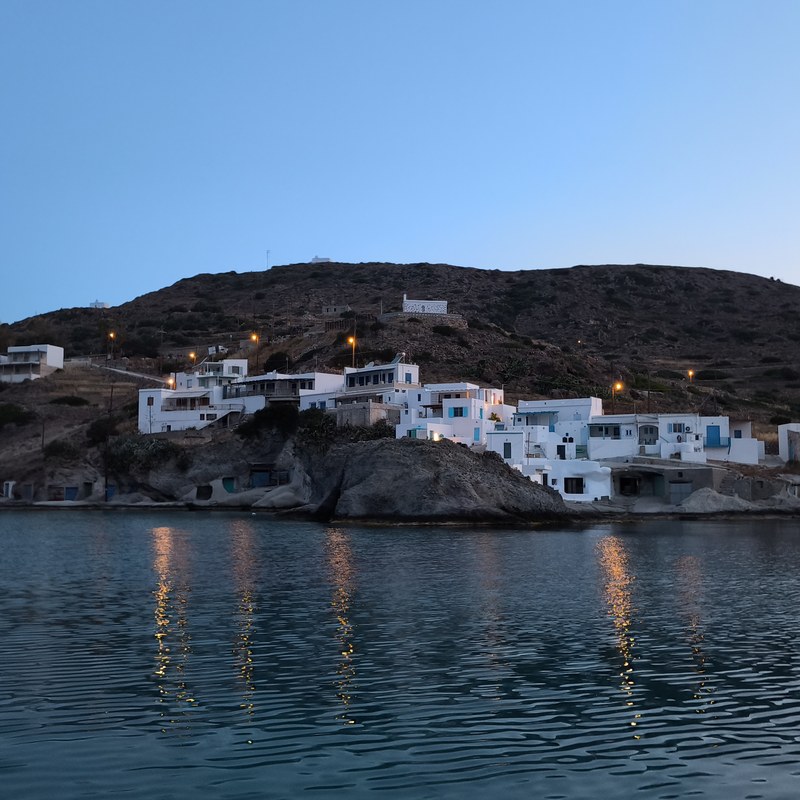
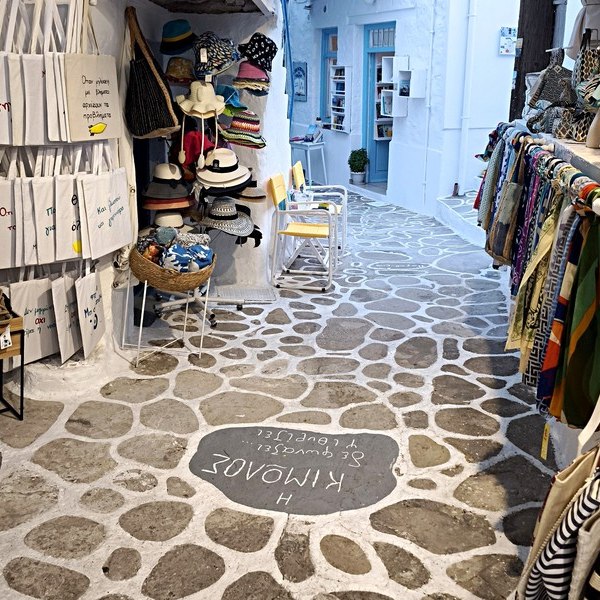
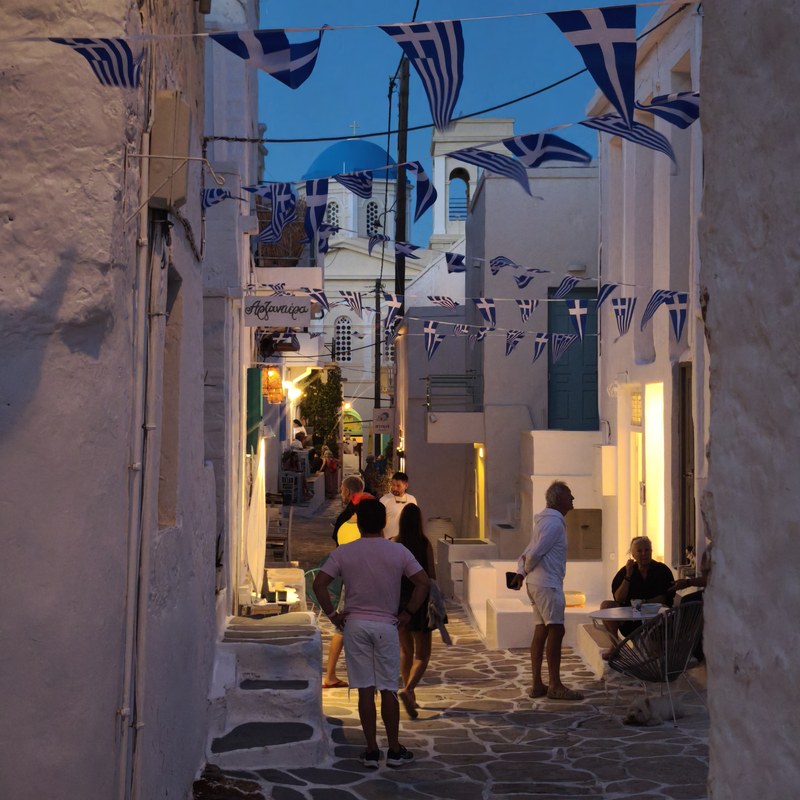
Kimolos gave its name to chalk: kimolia, in Greek, comes from the island, which exported its white earth for centuries. You land at Psathi, the small harbour on the east coast, where three tavernas face the water. The village, Chorio, is above it, twenty minutes on foot: white lanes, a medieval fortress in the middle, and nobody trying to sell you anything.
On the north-east coast, Prassa has white sand and a bottom that stays shallow a long way out — the easiest swimming in the area, and a good alternative anchorage when the wind backs south. To the west, the Skiadi rock, wind-carved into a mushroom, has to be earned by a dry walk with no shade: go early, or not at all.
The other empty islands we string together
Polyaigos and Kimolos are not exceptions: they are the best of a series. On the same week, depending on the wind, we add these.
- Kolona, on Kythnos — a tongue of sand joining the island to the Agios Loukas islet, with sea on both sides. It is the only anchorage in the Cyclades where you choose your face according to the wind. Be there early: in August it fills in the afternoon.
- Despotiko, facing Antiparos — an uninhabited islet with an Apollo sanctuary under excavation, and a shallow channel between the two that needs attention.
- Carthaea, on Kea — an ancient city with a Doric temple and a theatre cut into the slope, with no road reaching it. You anchor in the cove, wade ashore and climb. There is no ticket office.
- Cheronissos, on Sifnos — a fishermen’s inlet at the island’s northern tip, two tavernas and nothing else. Good shelter in southerly wind; in an established meltemi, we pass by.
- Folegandros — the most spectacular cliff in the Cyclades, with the Chora perched two hundred metres above the sea. The anchorages are open: settled weather only.
How they fit into a week
A Cyclades week out of Athens runs south-west down the chain — Kea, Syros, Paros, Sifnos, Milos — then comes back up in a single night crossing, because the northerly wind eases after dark. That is roughly 270 miles, and it is the most demanding week we sail in the Mediterranean.
Kimolos and Polyaigos are eight miles east of Kleftiko. Adding them does not cost a day: it costs two hours of sailing, and it changes the week. In practice we sleep at Kleftiko to have it at dawn without the day boats, cross the Polyaigos strait during the morning, stay there, and have dinner at Psathi. It is the one day of the programme where we do almost nothing, and it is the day everyone quotes.
When to go
| Season | What to expect |
|---|---|
| May – June | The best window. Moderate wind, empty islands, water still cool. |
| July – August | Meltemi season. Polyaigos and Kimolos stay empty, but the route has to be built around the northerly. |
| September | Our favourite. Warmest water, the meltemi fading, the islands emptying. |
| October | Calm and beautiful, but the weather becomes less predictable. |
What a week costs
From €6,000 a week for the whole boat, skipper included — about €950 per person with six aboard. Fuel, harbour fees and provisioning are on top and settled from the ship’s kitty. The boat is private: your group and nobody else, never cabins sold to strangers.
Frequently asked questions
Can you reach Polyaigos other than by boat?
No. The island is uninhabited and has no landing stage and no scheduled service. Day trips sometimes run from Kimolos or Milos in season, but they only cruise past. Spending the day there means having your own boat.
Can you spend the night at anchor off Polyaigos?
Yes in settled weather, in the strait facing Kimolos, and it is a night you remember. In an established meltemi, no: the strait funnels and the island offers no serious shelter. Then we sleep at Psathi, a mile away, and come back in the morning.
Is Kimolos better than Milos?
They do different jobs. Milos has the most spectacular volcanic landscapes in the Cyclades, Kleftiko above all, and you should go. Kimolos has the quiet and the tavernas. The right answer is to do both in the same day, which a boat allows and a land-based holiday does not.
Do you need to know how to sail?
No. The skipper is aboard and handles navigation, anchoring and weather. You take part as much as you feel like — some crews steer all week, others read on deck, and both are entirely fine.
Where do you leave from?
From Athens, from a marina about thirty minutes from the airport. The run down to Milos takes three to four days depending on the wind, and the way back is a single night crossing.
5.0/5 on Google (9 reviews) and 4.5 on Trustpilot (13 reviews). 22 reviews from crews who actually sailed with us, on two platforms we cannot edit. Read every one of them.