



Sailing from Tromsø to Nordkapp and back is a loop of roughly 400 nautical miles along the Arctic coast of Norway, from 69°39′N to 71°10′N. Most operators who advertise the North Cape take you to the plateau by bus from Honningsvåg. We round the cape by sea, under the 307-metre cliff that drops straight into the Barents. This is what that week actually involves.
The route, north and back
| Leg | Distance | |
|---|---|---|
| Tromsø → Skjervøy | 47 nm | Night passage out of the Lyngen Alps |
| Skjervøy → Hammerfest | 67 nm | The long one. Open coast. |
| Hammerfest → Reinøysundet | 17 nm | Anchorage, no village in sight |
| Reinøysundet → Havøysund | 10 nm | Low bridge, strong tidal stream |
| Havøysund → Honningsvåg | 26 nm | Last shelter before the cape |
| Honningsvåg → Nordkapp | 14 nm | 71°10′N. Rounded by sea. |
| Nordkapp → Hammerfest | 51 nm | Turning south |
| Hammerfest → Øksfjord | 36 nm | Glacier-fed water, into the fjords |
| Øksfjord → Skjervøy | 31 nm | |
| Skjervøy → Tromsø | 47 nm | Home under the Lyngen Alps |
That is about 346 miles of straight lines, nearer 400 once you follow the coast. At a working six knots it is close to seventy hours on the water.
Why it fits in a week: the sun doesn’t set
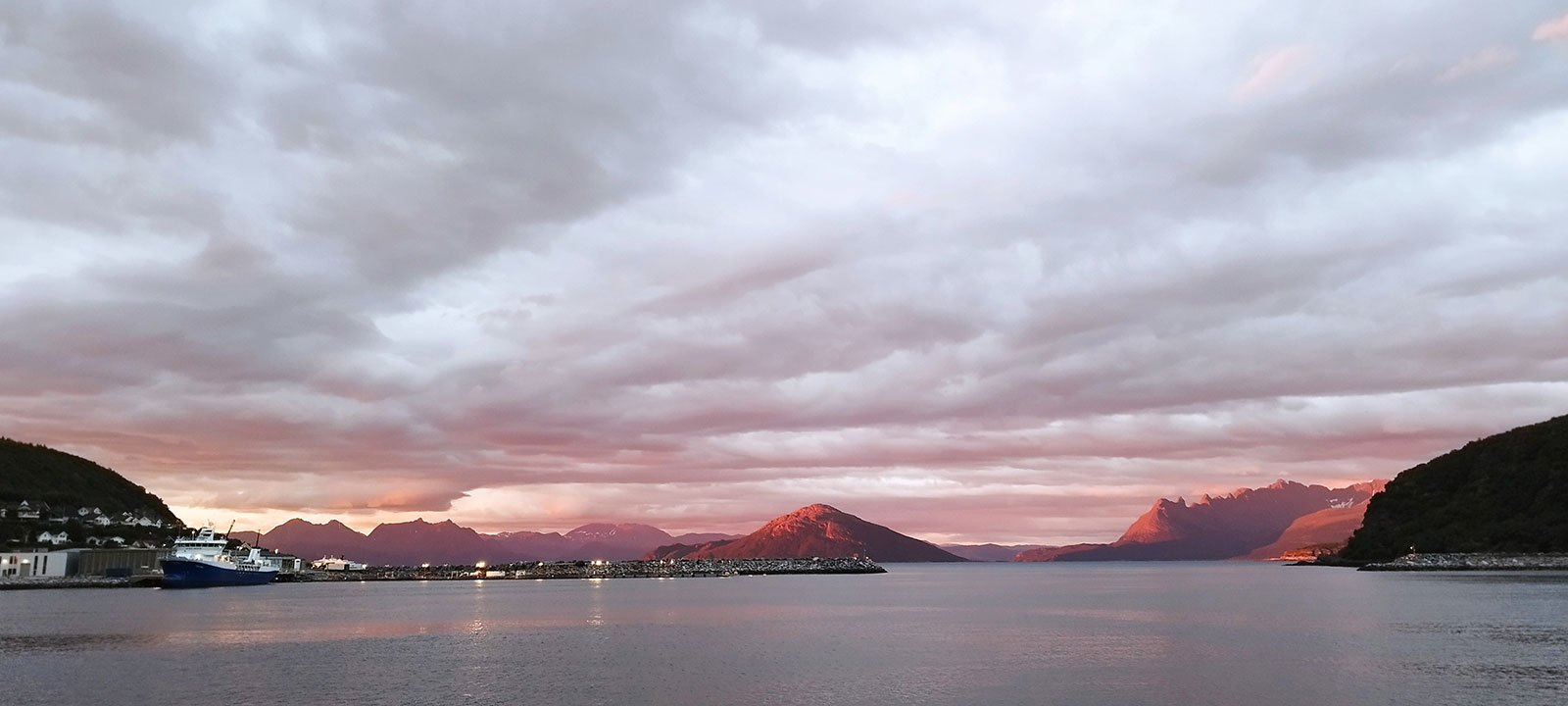
Seventy hours of sailing across seven days would be a punishing schedule anywhere else. Here it isn’t, and the reason is the one thing everybody knows about the Arctic but nobody thinks through: above the Circle in summer, there is no night to stop for.
At Nordkapp the midnight sun runs from roughly mid-May to the end of July. You can leave an anchorage at ten in the evening in full daylight, make a sixty-mile passage, and arrive to breakfast. There is no waiting for dawn, no timing a landfall for first light, no reason to be anywhere in particular at any particular hour. It reorganises a week completely, and it is the single biggest difference between sailing here and sailing anywhere in the Mediterranean.
Come in the second half of August, as we have, and the midnight sun is gone but there is still no real darkness — just a long luminous twilight that slides straight into morning. Fewer boats, colder water, the light lower and better.
Rounding the cape, rather than visiting it
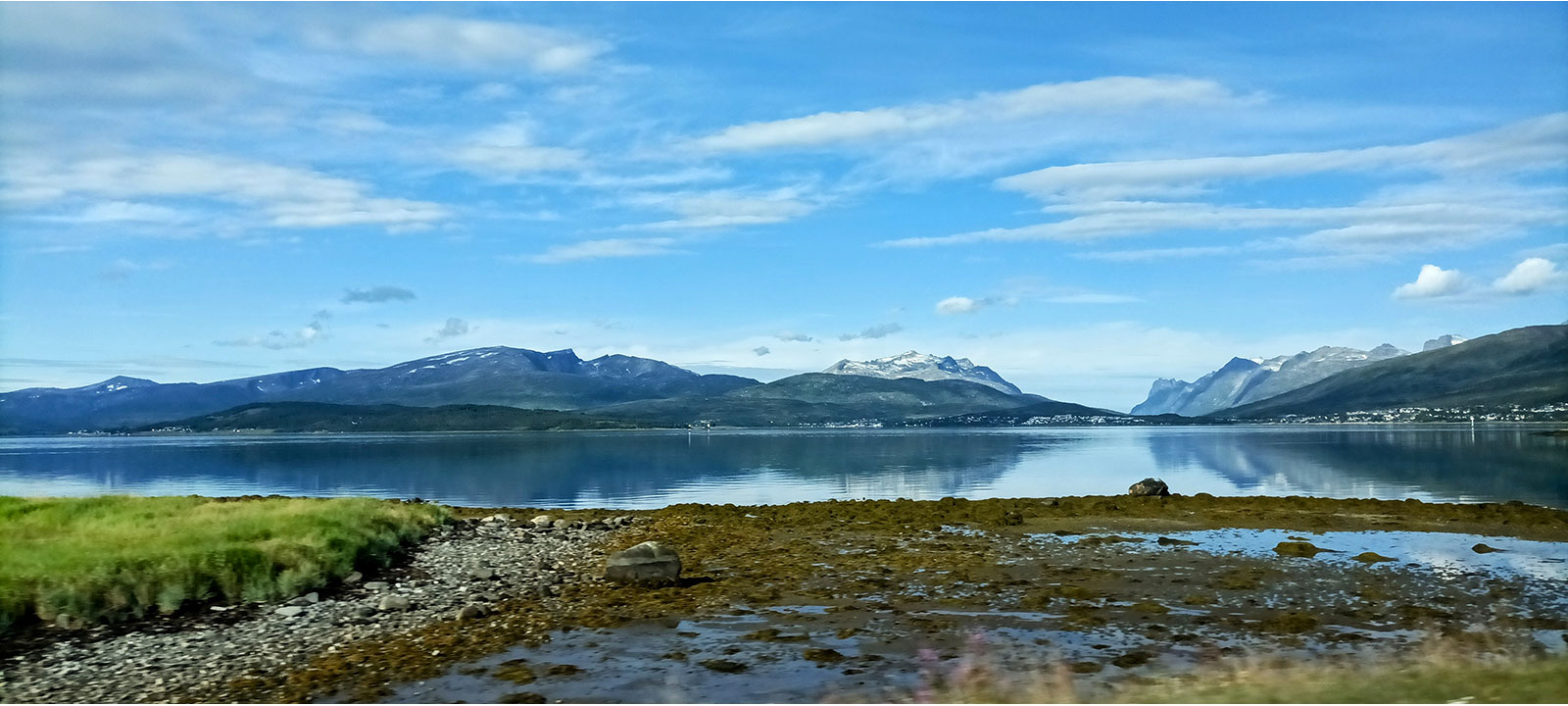
This is worth being precise about, because the brochures are not. Nordkapp is a cliff on the island of Magerøya. The visitor centre on top of it is reached by road from Honningsvåg, and that is how the great majority of people who say they have “been to the North Cape” got there — including guests on sailing itineraries that put a bus day in the middle of the week.
Going round it by sea is a different proposition. Fourteen miles from Honningsvåg, out of the shelter of the fjord and into the Barents, with the cliff above you and nothing between the boat and the pole. Wind on the quarter if you are lucky; heavier water if you are not. It is the reason to make the trip.
One honest footnote, because sailors notice: Nordkapp is not actually the northernmost point of mainland Europe. Knivskjellodden, the low spit just west of it, reaches a little further. Nordkapp is the one with the cliff, the plateau and the monument — and from the water, the one worth rounding.
What the coast asks of you
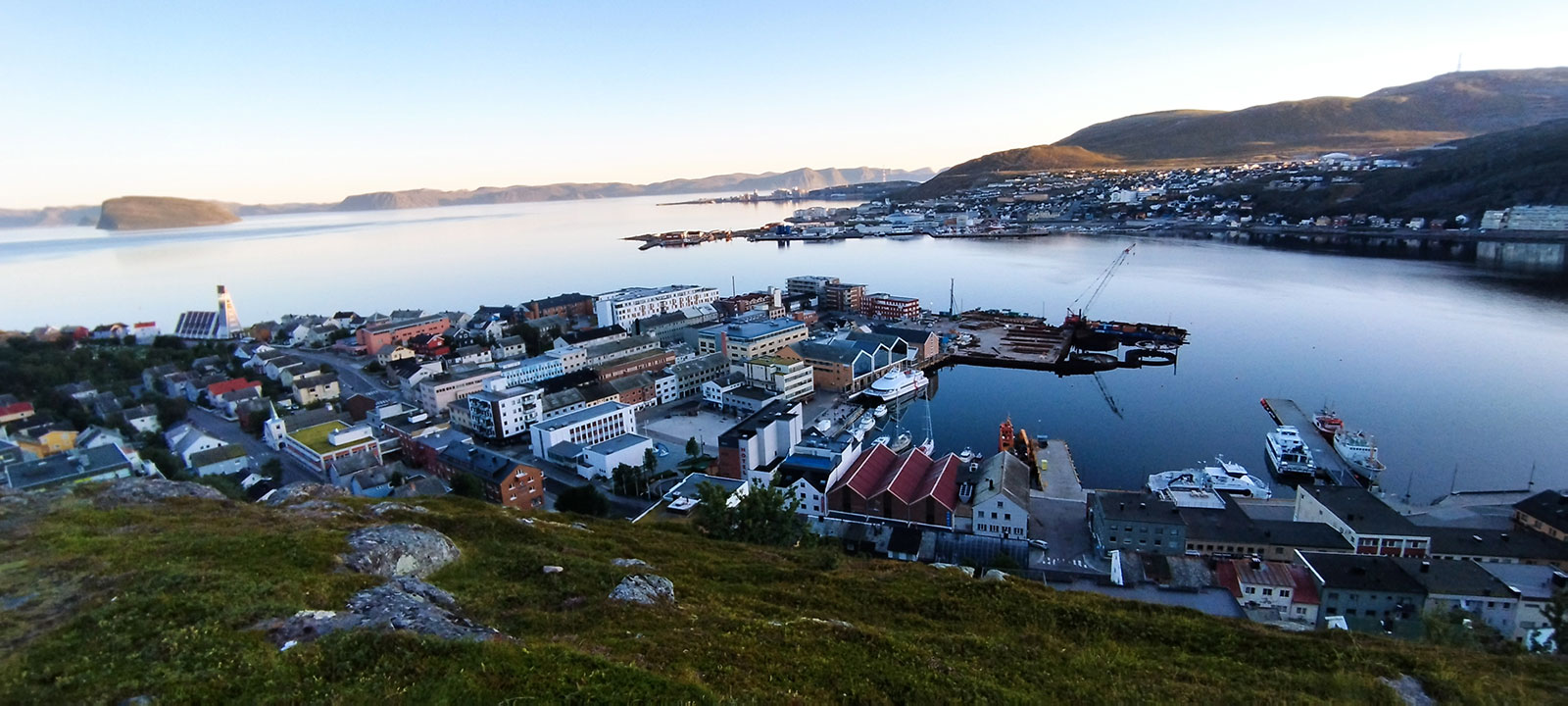
Havøysund is a tide gate. A narrow channel with a low bridge and a real tidal stream through it. You plan that passage for slack water and the right direction of tide, sails down, engine on, eyes on the chart. Ten miles that need more thought than the sixty-mile legs.
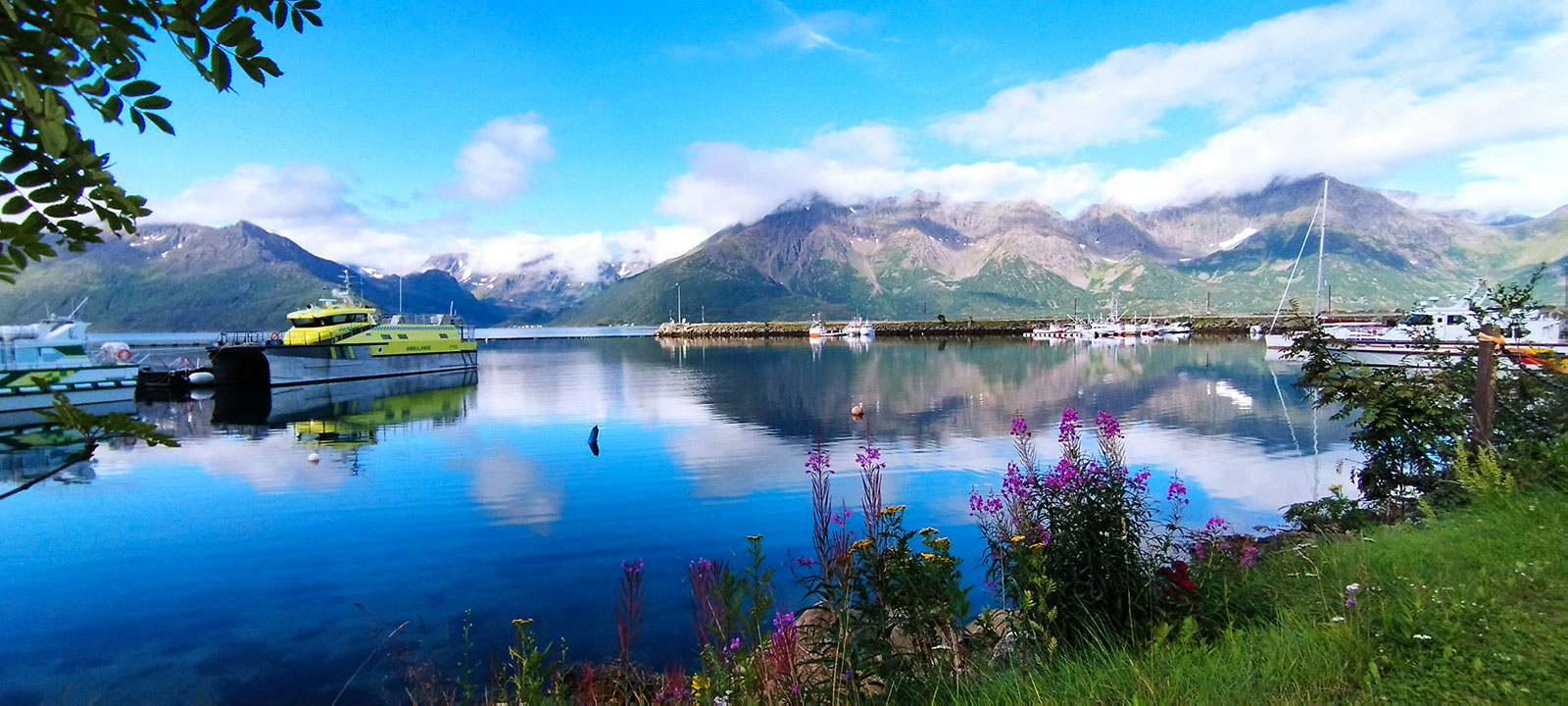
Shelter is plentiful, but it is fjord shelter. Unlike the Balearics, where the question is whether a cala will roll, here you are usually tucked deep inside something with mountains on both sides. The wind funnels rather than swings. Reinøysundet, a strait north of Hammerfest with reindeer on the slopes and no village at all, is the kind of anchorage this coast gives you.
The open stretch is Skjervøy to Hammerfest. Sixty-seven miles of exposed coast, and the leg that decides the shape of the week. Everything else can be shortened or postponed; this one you commit to.
It is cold, and that is a kit question, not a comfort question. Heavy jackets, proper layers, gloves. The water stays cold enough all summer that swimming is a dare rather than a plan — though Reinøysundet and Øksfjord both tempt people into it.
The stops that are worth the stop
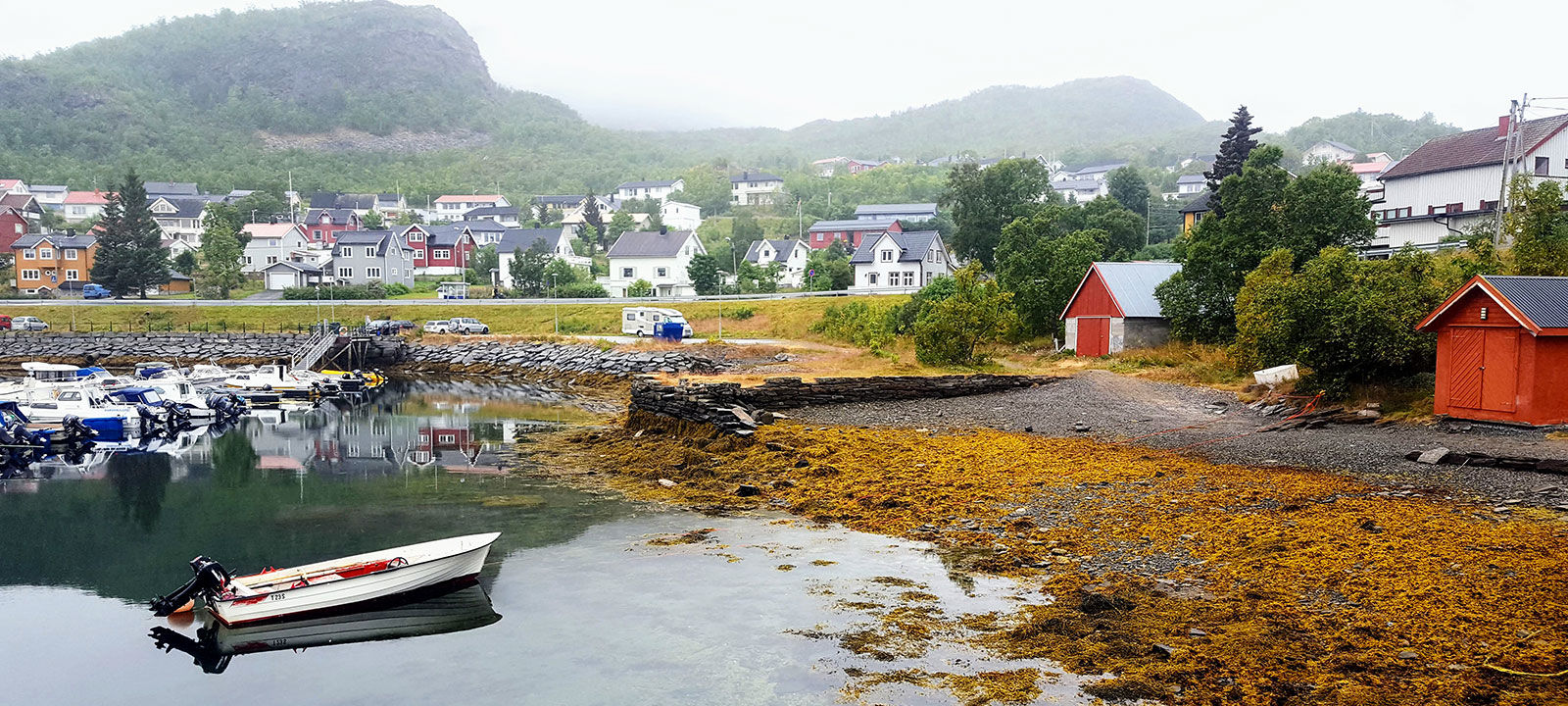
Hammerfest calls itself the northernmost town in the world and has the Meridian column to argue about it — a UNESCO-listed marker from the survey that first measured the shape of the earth. Reindeer graze the hills above the harbour. It is the natural place to spend a night both going up and coming back.
Skjervøy is a small fishing port behind its island, and the first landfall out of Tromsø. Arriving there after a night passage, stepping onto the quay in that pale daylight that never quite became dark, is the moment the trip stops being an idea.
Øksfjord, on the way south, has glacier-fed water and mountains that go straight up out of it. It is the one stop that is purely for the look of the place.
Lofoten or Nordkapp?
Both are Arctic Norway and they are not the same week. Lofoten, from Svolvær, is shorter passages between dramatic peaks, fishing villages, Trollfjord and Raftsundet, with more time ashore. Tromsø to Nordkapp is a passage-making week: bigger distances, thinner population, and an objective at the end of it.
If your group wants scenery and villages, go to Lofoten. If what appeals is the idea of taking a sailing boat to 71 degrees north and turning left round the cliff, come to Tromsø. We run both.
When to go
| Period | What to expect |
|---|---|
| Mid-May – June | Full midnight sun, snow still on the peaks, very few boats. Cold. |
| July | The classic window. Midnight sun until the end of the month, mildest weather. |
| August | No true night but no midnight sun either. Long low light, quiet harbours. |
| September onward | The weather turns and the season closes. Not our window. |
What a week costs
From €6,000 for the week for the whole boat with your skipper included — about €950 per person with six aboard. Provisioning, fuel and harbour fees are shared by the group on top. One boat, one group: never shared cabins, never strangers on board.
Common questions
Do I need experience for an Arctic week?
No, and this is the same answer as anywhere else we sail: your skipper handles the boat. What this route asks of you is not skill but appetite — for longer days on the water and for weather that is genuinely cold. A group that wants to swim and lunch ashore every day will be happier in the Balearics.
Do we actually reach Nordkapp every time?
No, and anyone who promises you otherwise is selling rather than sailing. The cape is exposed and the Barents does what it wants. If the window is not there we wait in Honningsvåg or turn the week towards the fjords instead. Reaching it matters; reaching it in bad water does not.
Is a week enough?
It is enough for the loop, and only because of the light. Ten days makes it comfortable and adds the fjords south of Øksfjord properly rather than in passing. Fourteen lets you go on to Lofoten.
Is this itinerary fixed?
No. It is the shape the route takes, and the distances are real, but the week is built with you and then rebuilt as the weather behaves. On this coast that is not a formality.
Sailing this?
See the Lofoten and Nordkapp odyssey, or tell us your dates and we’ll tell you honestly what the week can look like. You can also read what our crews wrote afterwards.
5.0/5 on Google (9 reviews) and 4.5 on Trustpilot (13 reviews). 22 reviews from crews who actually sailed with us, on two platforms we cannot edit. Read every one of them.