



The Cyclades in July and August mean the meltemi: a northerly that blows force 5 to 6, gusts 7, and runs in episodes of two to five days. Every charter site tells you to avoid those months. We sail them, and a Cyclades week comes to around 270 miles — the most demanding week we run in the Mediterranean. This is how the route is actually built around that wind, rather than in spite of it.
The four rules that make a meltemi week work
1. Go south with it, come back at night. The meltemi blows from the north. So the week runs south-west down the island chain — Kea, Syros, Paros, Sifnos, Milos — with the wind behind or on the quarter, which is fast and comfortable. Then the return leg north is done as a single overnight passage, because the meltemi typically eases after dark and rebuilds late the next morning. Ours is 75 miles from Milos back up to Aegina. It is a real passage, and it is the reason the whole week hangs together.
2. Sleep on the south side of everything. North-facing shores are exposed and will roll you all night. Every night stop on this route is a southern or lee coast: Finikas is on Syros’s sheltered western side, Platis Gialos is on Sifnos’s south coast, Carthaea is on Kea’s southern tip. It is not a coincidence, it is the whole design.
3. Move in the morning. On a typical meltemi day the wind freshens through the late morning, peaks mid-afternoon and eases in the evening. So we make distance early and are anchored before the peak, rather than arriving into the worst of it. This flips the rhythm most people expect from a sailing holiday, and it is worth saying up front.
4. Keep a spare day. Episodes last two to five days. If one arrives with real force, the answer is not to press on but to stop — Syros and Paros both have towns worth a day. A week with no slack in it is a week that ends up making a bad decision on the Thursday.
The route, out of Alimos
| Leg | nm | |
|---|---|---|
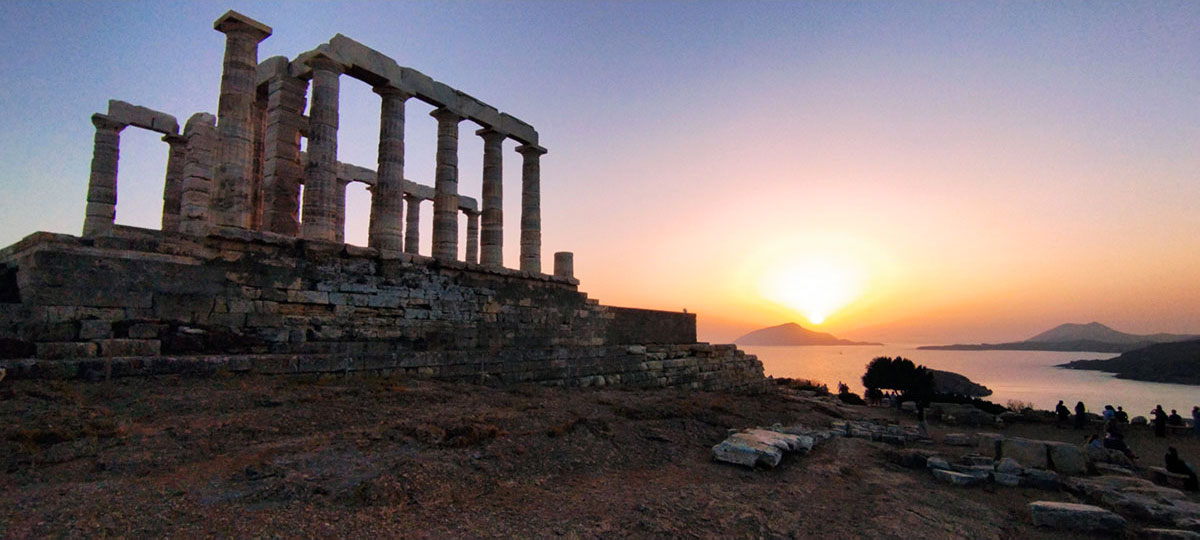
| Alimos → Cape Sounion | 22 | Poseidon’s temple above the anchorage at sunset |
| Sounion → Carthaea, Kea | 16 | Ancient city, reachable only by sea |
| Kea → Finikas, Syros | 28 | The lee coast. A two-street village. |
| Syros → Kolympethres, Paros | 23 | Granite sculpted into pools |
| Kolympethres → Parikiá | 4 | Town quay, the white town, provisioning |
| Paros → Platis Gialos, Sifnos | 22 | South coast, sheltered from the meltemi |
| Sifnos → Kleftiko, Milos | 26 | The turning point |
| Milos → Aegina | 75 | Overnight, when the wind drops |
| Aegina → Alimos | 17 | Home |
232 miles in straight lines, close to 270 once you follow the coast. For comparison, a relaxed week is 150 to 180 miles and an ambitious one is 260 to 300. This is at the top of that range.
The places that justify the miles
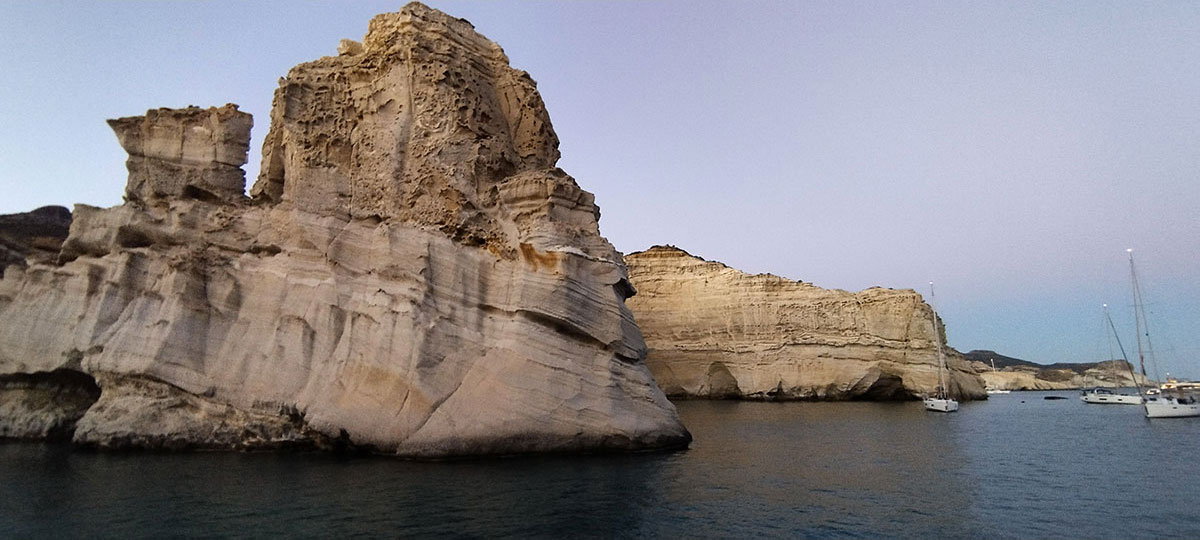
Kleftiko, on Milos, is the reason the route goes as far south as it does. White volcanic rock eroded into arches and caverns, water you can see the bottom of at fifteen metres. Day boats arrive from Adamas mid-morning and leave in the afternoon — so we sleep there and have it to ourselves at dawn, with coffee, before anyone else appears. That single decision is worth the extra fifty miles.
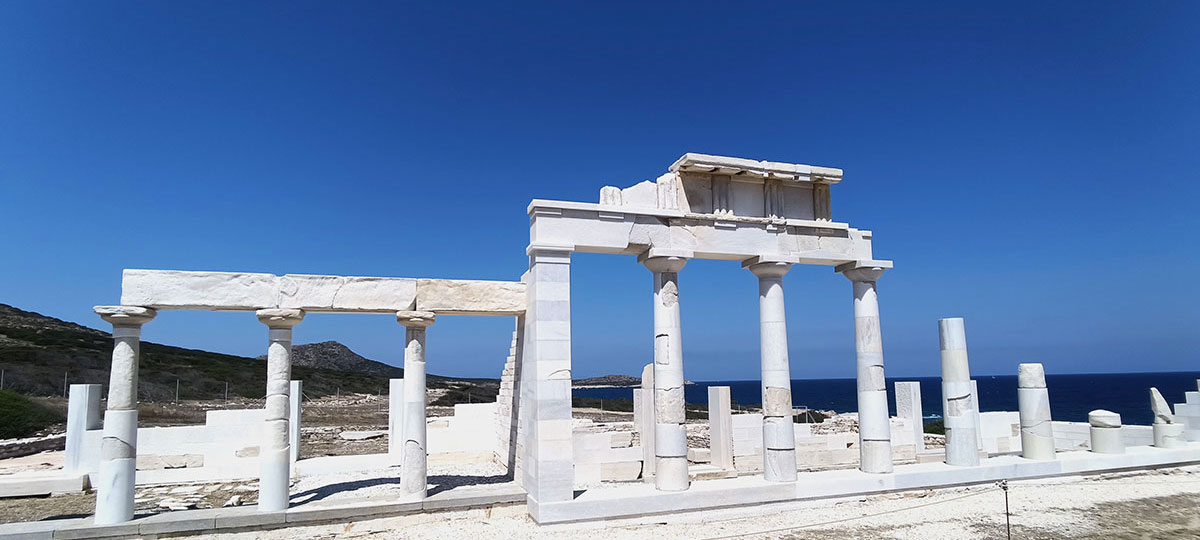
Carthaea, on Kea, is an ancient city with a Doric temple and a theatre cut into the slope, and no road to it. You anchor in the cove, wade ashore and walk up. There is no ticket office and usually nobody else.
Cape Sounion is twenty-two miles from Athens and gets the first night because of what it looks like at sunset: the marble columns of the temple of Poseidon catching the last light on the cliff directly above the anchorage. Byron carved his name into one of them, which the Greeks have never entirely forgiven.
Finikas, on Syros, is the antidote to Mykonos. Two streets, a bakery, three tavernas, fishermen mending nets. Syros is the administrative capital of the Cyclades and remains a real working island rather than a resort.
Should you just go in June instead?
Honestly — if you can, yes. Late May to mid-June, and again in September, gives you the same islands with a moderate wind instead of a strong one, and without the August fleet. That is the easy answer and it is the right one for most groups.
But most people cannot choose their week. If yours falls in July or August, the choice is not between a good Cyclades week and a bad one — it is between a Cyclades week planned around the meltemi and a Cyclades week that fights it. And if the group includes anyone nervous, we would genuinely point you at the Saronic Gulf instead, which stays workable all summer.
The anchorages, one by one
The first seven are the stops on the standard route. The six that follow are the empty islands we add when the week allows — the ones people come back for, and that no catalogue offers.
| Anchorage | What you find there | When to go |
|---|---|---|
| Cape Sounion | The marble columns of the temple of Poseidon catching the last light on the cliff, straight above the anchorage. Byron carved his name into one of them, which the Greeks have never entirely forgiven. | First night, 22 miles from Athens. Be there for sunset. |
| Carthaea, Kea | An ancient city with a Doric temple and a theatre cut into the slope. No road reaches it: you anchor in the cove, wade ashore and climb. | There is no ticket office and usually nobody else. |
| Finikas, Syros | The antidote to Mykonos. Two streets, a bakery, three tavernas, fishermen mending nets. | The sheltered western face of Syros: a night in the lee, even in the meltemi. |
| Kolympethres, Paros | Granite sculpted by the sea into basins and mushrooms, on the island’s north-western tip. | A lunch stop. The anchorage is open to the north. |
| Parikia, Paros | Town quay, the white town, and the mid-week provisioning. | One night alongside when the group wants an evening ashore. |
| Platis Gialos, Sifnos | A long sand beach on the south coast of Sifnos, the island where you eat best in the Cyclades. | South coast, so sheltered from the meltemi. A safe night. |
| Kleftiko, Milos | White volcanic rock eroded into arches and caverns, water where you see the bottom in fifteen metres. It is the reason the route runs this far south. | The day boats arrive from Adamas mid-morning and leave in the afternoon. We sleep there, and have it to ourselves at dawn. |
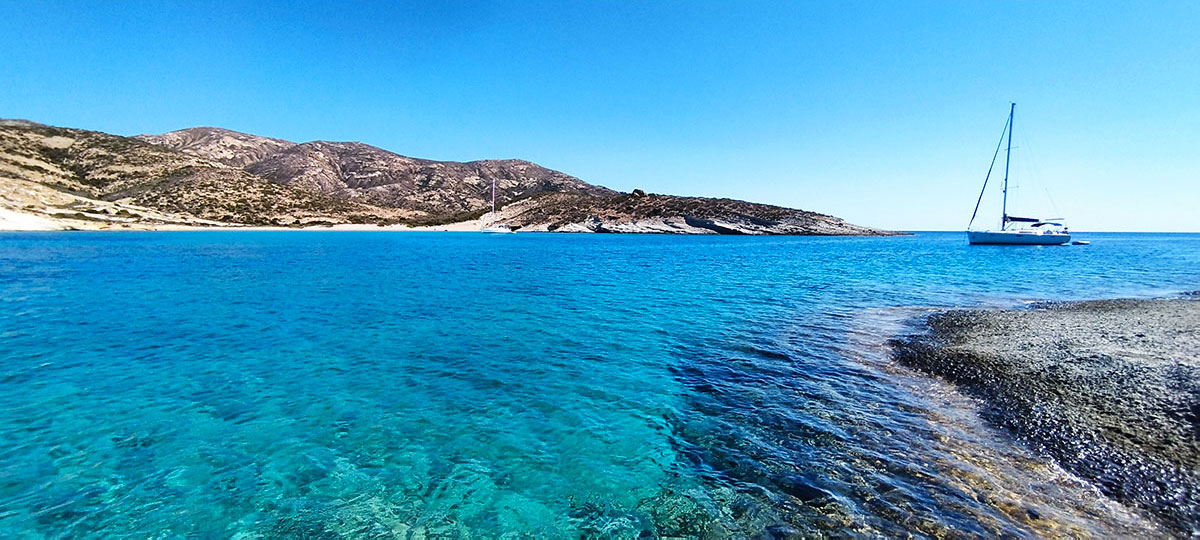
| Polyaigos | The largest uninhabited island in the Aegean. No harbour, no road, not one house — and a blue you do not believe until you have seen it. | A whole day at anchor with nobody. It is the anchorage crews talk about most afterwards. |
| Kimolos | The island next door to Milos, one mile away and a world apart. Psathi to land, the village of Chorio above it, and the white sand of Prassa on the north-east coast. | All season. Kimolos never fills up, not even in August. |
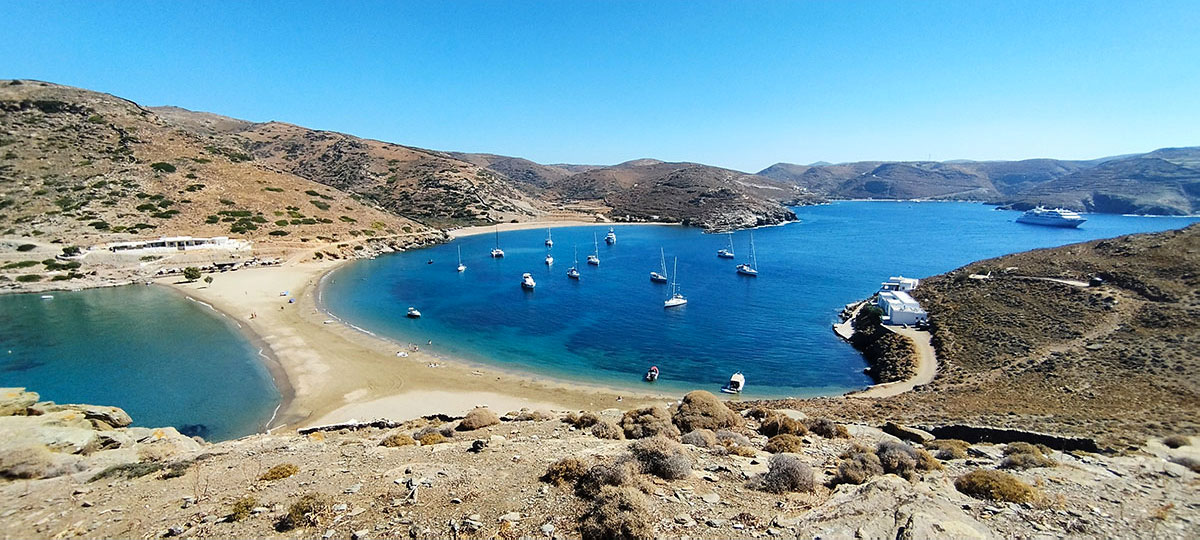
| Kolona, Kythnos | A tongue of sand joining the island to the Agios Loukas islet, with sea on both sides. You anchor on one side or the other depending on the wind — the only anchorage in the Cyclades where you choose your face. | Early. It is the best-known anchorage on Kythnos and it fills in the afternoon in August. |
| Despotiko | An uninhabited islet facing Antiparos, with an Apollo sanctuary under excavation and a shallow channel between the two. | A lunch stop, in light wind. The passage needs attention. |
| Cheronissos, Sifnos | A fishermen’s inlet at the northern tip of Sifnos, two tavernas and nothing else. | Shelter in southerly wind. In an established meltemi, we pass by. |
| Folegandros | The most spectacular cliff in the Cyclades, with the Chora perched two hundred metres above the sea. | When the week runs that far south. The anchorages are open, so settled weather only. |
The two emptiest of them have a page of their own: Polyaigos and Kimolos by sailboat.
When to go
| Period | What to expect |
|---|---|
| May – June | The best window. Moderate wind, empty islands, water still fresh. |
| July – August | Meltemi season. Fast, spectacular sailing for those who want it; plan around it. |
| September | Our favourite. Warmest water, meltemi fading, islands emptying. |
| October | Fine and quiet, but the weather becomes less predictable. |
What a week costs
From €6,000 for the week for the whole boat with your skipper included — about €950 per person with six aboard. Provisioning, fuel and harbour and mooring fees are shared by the group on top. One boat, one group: never shared cabins, never strangers on board.
Common questions
Is the meltemi dangerous?
No, it is demanding. It is a steady, predictable, dry wind with no squalls and no surprises — which is precisely why it can be planned around. What it does do is build a short steep sea between the islands, and make some anchorages untenable. Both of those are route decisions, and they are the skipper’s job, not yours.
Do we really sail through the night?
Once, on the way back, and only if the forecast supports it. Most people sleep through the second half. If the window is not there we break the return at Kythnos or Kea and shorten the rest of the week — the plan has that built in.
Do I need experience?
No. Your skipper sails the boat. What this week asks for is willingness to be at sea for real chunks of the day. It is the one destination where we say plainly that the sailing is the point.
Is this itinerary fixed?
Less than any other week we run. The Cyclades route is redrawn constantly against the forecast — which islands, which order, which nights. What stays fixed is the logic: south with the wind, sleep in the lee, move early, keep a day spare.
Sailing this?
See the Cyclades odyssey, or compare it with the calmer Saronic Gulf. Or tell us your dates and we’ll tell you honestly what that week’s wind is likely to do. You can also read what our crews wrote afterwards.
5.0/5 on Google (9 reviews) and 4.5 on Trustpilot (13 reviews). 22 reviews from crews who actually sailed with us, on two platforms we cannot edit. Read every one of them.